REVOLUTIONARY WOUND TREATMENT

WORLD OVERVIEW
The World Health Organization has reported that the estimated number of
patients with diabetes was nearly 425 million in 2017, consequently, increasing
the number of diabetes-related complications.
The global prevalence of diabetic foot ulcers (DFU) varies from 3% to 13%
worldwide, with a global average of 6.4%.
The annual incidence of DFU in diabetic patients is known to be about 2% to
5% and the lifetime risk ranges from 15% to 25%.
More than half of all DFU become infected, and diabetic foot infections (DFIs)
lead to higher amputation rates in the diabetes population.
It is generally known that DFU is a leading cause of non-traumatic lower
extremity amputations.
A recent prospective cohort study followed up the patients with neuropathic
DFU (nDFU) for 14 years to compare the amputation and mortality to patients
without DFU.
It showed that 29.3% patients with nDFU had limb amputations.
The 5- and 10-year mortality was 22% and 71% in the DFU group with a
median survival of 7.72 years compared to 3% and 5% and survival of 12.6
years in nDFU group.
Peripheral arterial disease (PAD) like cardiovascular disease, is a major arterial
disease caused by atherosclerosis, which is associated with a 20-fold higher
prevalence in patients with diabetes and it is known to be a risk factor for the
highest severity of single factors in diabetic patients, the probability of
amputation within one year after the first ulcer is 34.1% and the mortality rate
has been reported to be 5.5%.
The risk of death at 5 years for a patient with a DFU is 2.5 times as high as the
risk for a patient with diabetes who has no foot ulcer.
There were studies reported that the 5-year survival rate in major lower
extremity amputation in the diabetes population is estimated at less than 50%.
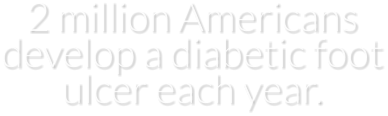
Approximately 2 million Americans develop a diabetic foot ulcer each year.
Within 5 years of ulceration, over 50% die and 5% lose a limb.
Diabetic foot ulcers cost the U.S. healthcare system $130 billion annually.
Patients require daily wound care and deal with pain and suffering.
Patients often fear major amputation from diabetic foot ulcers more than
death.
We are developing Version 2.0 of the Topical.
We are using a novel method that allows us to patent the process and the
product.
We are creating a Medical Device, not a drug.
FDA has specific rules for this process.
Required Steps:
-File Patents to protect it.
-Build custom equipment to produce Version 2.0 of the Topical.
-Commission toxicology and animal studies.
-Analyze studies and present reports.
We require a pre-clinical study of toxicology by a Clinical Research
Organization (CRO).
With the toxicology analysis in hand, to market the product to pharmaceutical
companies whereby we believe a pharmaceutical company will buy the
intellectual property from Medex47 for a very significant amount.
The pictures you saw are from testing Version 1.0 of the Topical with desperate
volunteers who were grateful to resolve in just a few weeks a problem that
plagued them for years.

WORLD OVERVIEW
The World Health Organization
has reported that the estimated
number of patients with diabetes
was nearly 425 million in 2017,
consequently, increasing the
number of diabetes-related
complications.
The global prevalence of diabetic
foot ulcers (DFU) varies from 3%
to 13% worldwide, with a global
average of 6.4%.
The annual incidence of DFU in
diabetic patients is known to be
about 2% to 5% and the lifetime
risk ranges from 15% to 25%.
More than half of all DFU become
infected, and diabetic foot
infections (DFIs) lead to higher
amputation rates in the diabetes
population.
It is generally known that DFU is a
leading cause of non-traumatic
lower extremity amputations.
A recent prospective cohort study
followed up the patients with
neuropathic DFU (nDFU) for 14
years to compare the amputation
and mortality to patients without
DFU.
It showed that 29.3% patients
with nDFU had limb amputations.
The 5- and 10-year mortality was
22% and 71% in the DFU group
with a median survival of 7.72
years compared to 3% and 5% and
survival of 12.6 years in nDFU
group.
Peripheral arterial disease (PAD)
like cardiovascular disease, is a
major arterial disease caused by
atherosclerosis, which is
associated with a 20-fold higher
prevalence in patients with
diabetes and it is known to be a
risk factor for the highest severity
of single factors in diabetic
patients, the probability of
amputation within one year after
the first ulcer is 34.1% and the
mortality rate has been reported
to be 5.5%.
The risk of death at 5 years for a
patient with a DFU is 2.5 times as
high as the risk for a patient with
diabetes who has no foot ulcer.
There were studies reported that
the 5-year survival rate in major
lower extremity amputation in the
diabetes population is estimated
at less than 50%.
Approximately 2 million
Americans develop a diabetic foot
ulcer each year.
Within 5 years of ulceration, over
50% die and 5% lose a limb.
Diabetic foot ulcers cost the U.S.
healthcare system $130 billion
annually.
Patients require daily wound care
and deal with pain and suffering.
Patients often fear major
amputation from diabetic foot
ulcers more than death.
We are developing Version 2.0 of
the Topical.
We are using a novel method that
allows us to patent the process
and the product.
We are creating a Medical Device,
not a drug.
FDA has specific rules for this
process.
Required Steps:
-File Patents to protect it.
-Build custom equipment to
produce Version 2.0 of the
Topical.
-Commission toxicology and
animal studies.
-Analyze studies and present
reports.
We require a pre-clinical study of
toxicology by a Clinical Research
Organization (CRO).
With the toxicology analysis in
hand, to market the product to
pharmaceutical companies
whereby we believe a
pharmaceutical company will buy
the intellectual property from
Medex47 for a very significant
amount.
The pictures you saw are from
testing Version 1.0 of the Topical
with desperate volunteers who
were grateful to resolve in just a
few weeks a problem that plagued
them for years.
REVOLUTIONARY WOUND
TREATMENT